


Alchemy, Astrology, Astronomy
Alchemy, a form of speculative thought that, among other aims, tried to transform base metals such as lead or copper into silver or gold and to discover a cure for disease and a way of extending life.
Alchemy was the name given in Latin Europe in the 12th century to an aspect of thought that corresponds to astrology, which is apparently an older tradition. Both represent attempts to discover the relationship of man to the cosmos and to exploit that relationship to his benefit. The first of these objectives may be called scientific, the second technological. Astrology is concerned with man’s relationship to “the stars” (including the members of the solar system); alchemy, with terrestrial nature. But the distinction is far from absolute, since both are interested in the influence of the stars on terrestrial events. Moreover, both have always been pursued in the belief that the processes human beings witness in heaven and on earth manifest the will of the Creator and, if correctly understood, will yield the key to the Creator’s intentions.


Astronomicum Ceasareum (1540)
Astronomicum Caesareum (Astronomy of the Caesars) also translated as The Emperor's Astronomy, is a book by Petrus Apianus first published in 1540.
Astronomicum was initially published in 1540. Charles V, Holy Roman Emperor, and Ferdinand II of Aragon commissioned the work. It was printed at Apianus's press in Ingolstadt, Bavaria, and took eight years to produce. It expanded and changed when reprinted; the final version has 55 leaves. Apianus evidently changed his plans while producing a single edition. A volvelle in one version of Astronomicum has "an entirely irrelevant base of an astrolabe" underneath, suggesting that he considered creating one and then abandoned the idea.
Twenty-one of its 36 woodcuts are volvelles. Astronomicum's volvelles rely on a geocentric model of the universe. However, despite the false science on which they depended, knowledgeable readers could still use them to predict planetary movements. Nicolaus Copernicus published De revolutionibus orbium coelestium shortly after Astronomicum appeared, which began a transition to heliocentrism as the standard astronomical model.
Although other 16th-century books used volvelles, Astronomicum's are distinctive because they take precedence over the book's text, as opposed to serving as illustrations.
According to Ronald Brashear and Daniel Lewis, Astronomicum is "really a scientific calculating instrument as much as a book".
Theatrum Chemicum Britannicum (1652)
Theatrum Chemicum Britannicum first published in 1652, is an extensively annotated compilation of English alchemical literature selected by Elias Ashmole. The book preserved and made available many works that had previously existed only in privately held manuscripts. It features the alchemical verse of people such as Thomas Norton, George Ripley, Geoffrey Chaucer, John Gower, John Lydgate, John Dastin, Abraham Andrews and William Backhouse.
In his preface Ashmole says of himself, "I must profess I know enough to hold my tongue, but not enough to speak."
Contents
The volume is described as Theatrum Chemicum Britannicum. Containing Severall Poetical Pieces of our Famous English Philosophers, who have written the Hermetique Mysteries in their owne Ancient Language. Faithfully Collected into one Volume, with Annotations thereon, by Elias Ashmole, Esq. Qui est Mercuriophilus Anglicus. The first part, London, Printed by J. Grismond for Nath: Brooke, at the Angel in Cornhill. MDCLII. The compilation contains the following collection of works, several of which are by unknown authors:
-
Elias Ashmole. Prologue. January 26, 1652.
-
Thomas Norton. The Ordinall of Alchimy.
-
George Ripley. The Compound of Alchymie.
-
Anonymous. Liber patris sapientiae.
-
Verse beginning "In the name of the holy Triniti".
-
Verse beginning "Iyfe thow wilt thys warke begyn."
-
Anonymous. Hermes Bird.
-
Geoffry Chaucer. The Tale of the Chanans Yeoman.
-
John Dastin.The Worke of John Dastin. or Dastin's Dreame.
-
Pearce the Black Monke upon the Elixir.
-
The Worke of Rich: Carpenter. or Carpenter's Worke
-
Abraham Andrews. The Hunting of the Greene Lyon.
-
Thomas Charnock. The Breviary of naturall Philosophy. 1557.
-
Thomas Charnock. Aenigma ad Alchimiam. 1572.
-
Thomas Charnock. Aenigma de Alchimiae. 1572.
-
William Bloomefield. Bloomfields Blossoms: or, The Campe of Philosophy.
-
Edward Kelley. Sir Edward Kelle's Worke.
-
Edward Kelley. Sir Ed: Kelly concerning the Philosophers Stone written to his especiall good Freind, G.S. Gent.
-
John Dee. Testamentum Johannis Dee Philosophi summi ad Johannem Gwynn, transmissum 1568.
-
Thomas Robinson. Thomas Robinsonus de lapide philosophorum.
-
Anonymous. Experience and Philosophy.
-
W.B. The Magistery. December, 1633. (Revealed to be by William Backhouse in Ashmole's annotated copy of the book)
-
Anonymi: or, severall workes of unknowne Authors.
-
John Gower. John Gower concerning the Philosophers Stone.
-
George Ripley. The Vision of Sr: George Ripley: Channon of Bridlington.
-
George Ripley. Verses belonging to an emblematicall Scrowle: Supposed to be invented by Geo: Ripley.
-
George Ripley. The Mistery of alchymists, Composed by Sir Geo: Ripley Chanon of Bridlington.
-
George Ripley. The Preface prefixt to Sir Geo: Ripley's Medulla. 1476.
-
George Ripley. A shorte worke That beareth the Name of the aforesaid Author, Sir G. Ripley.
-
John Lydgate. Translation of the second Epistle that King Alexander sent to his Master Aristotle.
-
Anonymi.
-
Anonymous. The Hermet's Tale.
-
Anonymous. A Discription of the Stone.
-
Anonymous. The standing of the Glasse for the tyme of the Putrefaction, and Congelation of the Medicine.
-
D.D.W. Bedman. or W. Redman. Aenigma Philosophicum.
-
Fragments
-
Thomas Charnock. Fragments coppied From Thomas Charnock's owne hand writing. 1574.
-
In some Coppies I have found these Verses placed before Pearce the Black Monk, upon the Elixir.
-
I have seene an old Coppy of the said work of Pearce the Black Monk, to the end of which these following Verses were joyned.
-
This following Fragment in some copies I have found placed at the end of the aforegoing Exposition of Pearce the Black Monke. A Conclusion.
-
An other Conclusion.
-
The whole Scyence.
-
-
Annotations and Discourses, upon Some part of the preceding Worke.
-
A table of the several Treatises, with their Authors Names, contained in this Worke.
-
A Table explaining the Obscure, Obsolete, and mis-spell'd words used throughout this Worke.


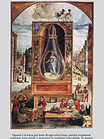

Andrea Aromatico - Alchimia (1996)
The book Alchimia: l'oro della conoscenza (lit. 'Alchemy: The Gold of Knowledge') is part of an Italian collection "Universale Electa/Gallimard", published by Electa/Gallimard in 1996 in their Storia e civiltà series. The French edition—Alchimie, le grand secret—published by Éditions Gallimard, came out in the same year, but Gallimard shortened the "Documents" section at the back of the book. The English edition, entitled Alchemy: The Great Secret, is based on the French instead of the original Italian, was released in the United States in 2000, distributed by Harry N. Abrams in the "Abrams Discoveries" series. It is a pint-sized coffee table book, replete with colour plates, all well reproduced, with useful information in the captions.
There are three chapters:
I, "The Concept of Alchemy" (Lo spirito e la materia);
II, "The Theory of Alchemy" (I maestri e la grande ricerca);
III, "The Practice of Alchemy" (Il fuoco e la pietra filosofale).
These are followed by a section of five "Documents" (Italian edition has ten[), which are excerpts taken from well-known texts on alchemy:
1, The earliest sources;
2, The medieval mystics and scientists;
3, The triumph of Hermetism in the Renaissance;
4, Alchemy in the modern era;
5, Alchemy in literature.
There is a list of further reading, where is also included a number of English sources. The book closes with a list of illustrations and an index. It is the only work by Andrea Aromatico which has been translated into English, and other translations including Japanese, Polish, South Korean, Spanish and simplified Chinese, all of which are based on the French version.
The book opens with a series of reproductions of some elaborate images from Splendor Solis, accompanied by texts taken from the Emerald Tablet, the essential text of Hermetic philosophy, or alchemy, which was born of the oldest civilisations, and the transformation of metals has become one of the emblematic acts. But the search for "philosophers by means of fire" is not limited to the mere transmutation of lead into gold; it is indeed a philosophy, which most often takes the form of an "experimental metaphysics", and which has also given birth to a language—the Qabalah—and an extraordinary florilegium of images [nl] and symbols. Aromatico explores in the book this compound of science and myth, examining ancient texts and illuminated manuscripts to shed light on an enigmatic science of spells, ceremonies, and secret beliefs.


