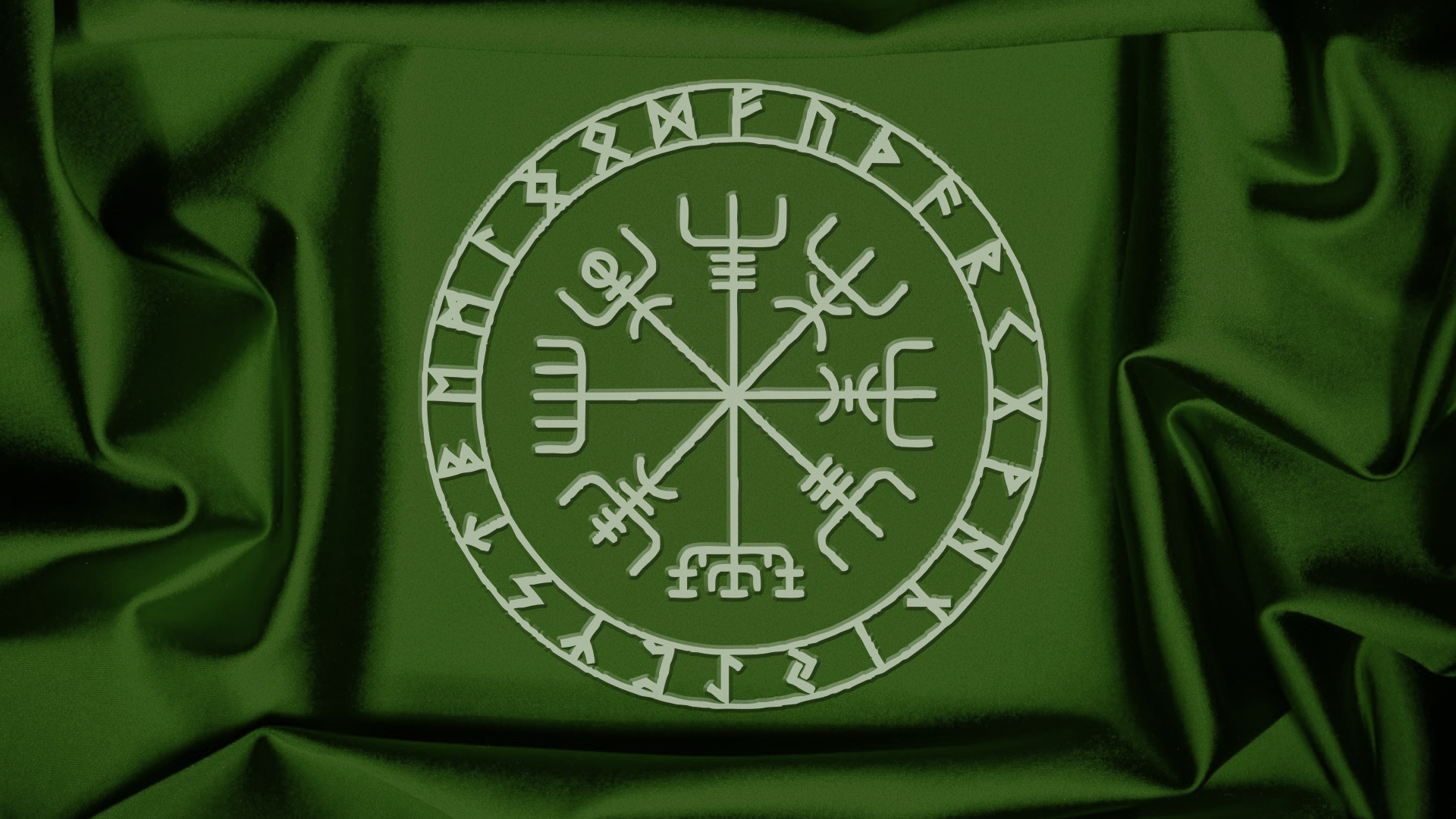


The Rune of Boundaries
The Rune of Generosity
The Rune of Chance
The Rune of Potential
The Rune of Authority
The Rune of Fate
Runes
History

Björketorpsstones - Evald Hansen - Montelius, Sveriges hednatid (1877)
Runes are letters in the runic alphabets of Germanic-speaking peoples, written and read most prominently from at least c. 160 CE onwards in Scandinavia in the Elder Futhark script (until c. 700 CE) and the Younger Futhark - which illuminated the Viking Age (c. 790-1100 CE) - as well as in England and Frisia in the Anglo-Saxon Futhorc (also known as Anglo-Frisian Futhorc) writing system. In England, runes were in use from the 5th century CE until perhaps the turn of the 11th century CE, while in Scandinavia the use of runes extended well into the Middle Ages and beyond.
Designed to be inscribed first into wood and metal, during the Viking Age large amounts of inscribed runestones were erected predominantly throughout Scandinavia; these runestones, despite being tough to decipher, are of absolutely critical value to us, as they are the only written source contemporary to this period. Germanic Runes are found in areas with a history of Germanic-speaking peoples, from Iceland to Scandinavia, through England, through Central Europe to Constantinople – basically places Germanic tribes on occasion called home plus any place the Vikings touched.
The origins of the runic script are shrouded in a decent amount of mystery. The earliest inscription that is without a doubt runic is the one reading harja (possibly meaning “comb”, or “warrior”) on the Vimose comb from Denmark, dated to c. 160 CE, which uses runes so confidently and maturely that scholars feel it must result from at least a hundred years' experience in writing in runes. How exactly this tradition was pulled out of the hat, however, is subject to much debate and speculation. Inspiration from both the Greek and Roman alphabets, as well as a northern Italic or even Danish origin, has been suggested. The Greek route is perhaps the most likely in light of the resemblances in script, and a variation of a Greek alphabet – Greek was unstandardised between c. 700-400 BCE – may have reached Germanic speakers by way of a 'middle-man' group perhaps made up of eastern Europeans. Norse mythology itself offers us a fun alternative, too, in depicting the god Odin gaining the knowledge of the runes after sacrificing himself to himself and hanging on the “windy tree” for nine nights with no food or drink (Hávamál, 139-140).
Either way, by 500 CE use of the runic script had fanned out across the Germanic world – from Norway, Sweden, Denmark and England to outposts in Germany, Russia, Poland and Hungary – and recorded a variety of Germanic languages. The main runic scripts that eventually came into being were:
-
Elder Futhark (at least c. 160-700 CE)
-
Younger Futhark (c. 700 - c. 1200 CE)
-
Anglo-Saxon Futhorc (also Anglo-Frisian Futhorc, c. 5th century - c. 1000 CE)
-
Medieval Futhork (fully formed c. 13th century CE).
Keeping the runic flame alight after the medieval period, medieval runes actually remained in use, increasingly heavily influenced by Latin, in Sweden's Dalarna province from the 16th through to the 20th century CE, its particular forms known as Dalecarlian runes or Dalrunes. We can conclude that runes are tenacious, for sure; the use of modern runes has even made it into modern paganism, and they appear widely in a fantasy context.
Golden Numbers

Runic Lunar Calendar
A Runic calendar (also Rune staff or Runic Almanac) is a perpetual calendar, variants of which have been used in Northern Europe until the 19th century. A typical runic calendar consisted of several horizontal lines of symbols, one above the other. Special days like solstices, equinoxes, and celebrations (including Christian holidays and feasts) were marked with additional lines of symbols.
Runic calendars were written on parchment or carved onto staves of wood, bone, or horn. The oldest one known, and the only one from the Middle Ages, is a staff from Nyköping, Sweden, believed to date from the 13th century. Most of the several thousand which survive are wooden calendars dating from the 16th and the 17th centuries. During the 18th century, Runic calendars had a renaissance, and calendars dating from around 1800 were made in the form of brass tobacco boxes.
The calendar is based on the 19 year-long Metonic cycle, correlating the Sun and the Moon, but the calendar does not prove knowledge of the length of the tropical year or of the occurrence of leap years. The two sliding halves are aligned and set at the beginning of each year by observing the first full moon after the first new moon after the winter solstice. The first full moon also marked the date of Disting, a pagan feast and a fair day also known as Thing of all Swedes.

Marks
On one line, 52 weeks of 7 days were laid out using 52 repetitions of the first seven runes of the Younger Futhark. The runes corresponding to each weekday varied from year to year.
On another line, many of the days were marked with one of 19 symbols representing the 19 Golden numbers, for the years of the Metonic cycle. In early calendars, each of the 19 years in the cycle was represented by a rune; the first 16 were the 16 runes of the Younger Futhark, plus three special runes for the remaining three years. The new moon would fall on that day during that year of the cycle. For example, in the 18th year of the cycle, the new moons would fall on all the dates marked with tvimadur, the symbol for year 18. Later calendars used Pentadic numerals for the values 1–19.
Runic Birth Calendar


Rune Casting
Viking Runic Divination
While we know that the Vikings used the runes as a tool for divination, information about how exactly this was done is lost.
There are many different guides out there for how many runes should be cast and how. The two most popular methods are laying out patterns and throwing them onto a map.
Our assumptions about how the Vikings divined with the runes are primarily based on observations made by the Roman historian Tacitus hundreds of years earlier about Germanic practices.
It is assumed that the runes were carved onto small objects, such as sticks or bones. A runemaster would then ask a question and then throw at least some of these inscribed objects before him (or her – there is very good evidence that Viking women were involved in divination). They would then make an interpretation based on where the runes landed.
But this is largely the limit of our confirmable knowledge.

Modern Runic Divination
Modern runic divination practices date from the 17th century when a Swedish mystic named Johannes Bureus was inspired by visions to create a new runic divination system that marries the Younger Futhark runes with the Kabballah, a Jewish mystical tradition.

Casting Boards
The other most popular method is to use a casting board or sheet, with areas for the past, present, and future, or other important regions drawn on the board. After asking the question you then throw the runes down, and where they land dictates what each rune relates to.
Sometimes the names of the worlds of the Norse cosmos drawn on the board or sheet and used as proxies for concepts. For example, outer realms, such as Muspelheim and Jotunheim represent the objective universe, while inner realms, such as Asgard and Helheim, represent psychological influences. The central realm of Midgard then represents how these elements come together.
Interpretation
The established and agreed-upon guidance for interpreting each of the runes, in combination with your intuition, depends on exactly which runic system you are using. Interpretations also tend to change depending on whether the rune falls upright, upside-down turned on its side, and so forth.
The runic futhark is usually divided into three aetts. An ætt is one of three groups of eight runes of the older Futhark. In it, "Freyrs ætt" is fuþarkgw, "Heimdalls ætt" is hnijïpzs, and "Tyrs ætt" is tbemlŋdo. In addition, it applies to one of the three groups of six runes of the Armanen Futharkh.
Freyrs ætt
In Norse mythology, Freyr was the ruler of peace, fertility, rain, and sunshine and the son of the sea God Njörd.
Heimdalls ætt
In Norse mythology, Heimdall was the watchman of the Gods.
Tyrs ætt
Tyr, the Norse Sky God, was representative of war and justice.
Freyr's Aett

Fehu ᚠ - Cattle/Wealth
The first of the Elder Futhark, Fehu indicates prosperity and material wealth, either won or earned income. It can represent good luck, abundance and financial success in the near future. It can also relate to social success. Not everyone chooses to read a rune as reversed (“merkstave”) if it comes up that way, but if doing so resonates with you- its reversed meaning may indicate the loss of personal possessions or income, a dip in self-esteem or some other kind of material struggles.
KEYWORDS: Abundance, luck, hope, prosperity, wealth, fortune
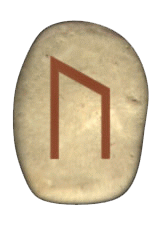
Uruz ᚢ - Ox
The second, Uruz, is representative of the wild bull. This is a stone of strength, endurance, hard work, perseverance, motivation, and determination. It can indicate a time of great energy, speed and health. It also shows increasing power and masculinity. Reversed, it may indicate a loss of health, endurance, a blockage, dominance of others over you or misdirected force.
KEYWORDS: Strength, endurance, health, courage, vigour, vitality, force, perseverance

Thurisaz ᚦ - Mallet/Giant
This represents Thor’s hammer or a giant. As such, it indicates a powerful direction of energy and force, for either destruction or defence, so may also indicate conflict. This could be cathartic, cleansing and purgative. Reversed, it could mean defencelessness, compulsion, spite or betrayal.
KEYWORDS: Defence, challenge, danger, protection, attack, strength

Ansuz ᚫ - Message
Ansuz is the rune of communication. It’s representative of the ancestral God Odin’s wisdom and so indicates a divine message or insight arriving. It can also mean good advice, wisdom, truth, inspiration and enthusiasm. Reversed it could point to a miscommunication, deceit, misunderstandings and manipulation.
KEYWORDS: Revelation, signs, visions, insight, message, knowledge, communication

Raidho ᚱ - Journey
Raidho is indicative of a journey and represents a wheel. This could be both physical travel, as in a holiday or house move, or a spiritual voyage in the expansion of your horizons. It can also indicate things being put into perspective, evolution and the cycle of life. Reversed it means rigidity, injustice, irrationality and disruption.
KEYWORDS: Progress, movement, evolution, perspective, journey, travel

Kenaz ᚲ - Torch
Kenaz is the flame or torch. As such, it represents the beacon of truth and finding your true north guided by your own shining light. It can indicate that that which was previously unknown may come to light, secrets may be spilled, and you are on the right path of finding your true calling in life. It also means knowledge, creativity, inspiration, vitality, regeneration and energy. Reversed it can indicate that you lack vision, are stuck in a creative rut, false hope, and instability.
KEYWORDS: Enlightenment, knowledge, comprehension, insight, illumination, calling, purpose, idea

Gebo ᚷ - Gift
Gebo is the rune of gifts. It’s a positive symbol that indicates you are in the possession of many gifts and talents or that someone will bestow upon you bountiful blessings. It also relates to generosity, balance, and positive relationships. It has no inverted meaning.
KEYWORDS: Generosity, partnership, gifts, talents, charity, service, assistance, luck, fortune

Wunjo ᚹ - Joy
Wunjo is representative of the clan’s flag and victory. It represents triumph and joy, security, safety, celebration and belonging. It can also indicate harmony, prosperity and spiritual rewards. Reversed it can point to sorrow, alienation and loss.
KEYWORDS: Pleasure, joy, feast, celebration, comfort, belonging, community, success, festivities
Heimdall 's Aett

Hagalaz ᚺ - Hail
Hagalaz represents hail. This natural form of disaster which strikes out of the blue and has the power to destroy much needed crops, is similarly indicative of sudden and cataclismic change. Similar to The Tower card in the tarot, Hagalaz represents an unavoidable change that is out of our hands, but how destructive it ends up being is dependant on whether we are capable of weathering its storm with grace. As they say, some storms come to clear our path. The lesson of Hagalaz is to learn from our hardships and grow through our mistakes. It has no inverted meaning.
KEYWORDS: Destruction, natural wrath, uncontrolled forces, testing, change, external input

Nauthiz ᚾ - Needs
Nauthiz is indicative of our needs. What do you need to feel emotionally stable and fulfilled? Are you taking enough time for yourself to balance work, play and rest? Assessing what are our needs and where we may currently be lacking can help us take better care of our future selves, we can’t pour form an empty cup after all. It can also indicate delays, restriction, and endurance. This is a time to practice patience. Nauthiz reversed can point to depression, exhaustion, and distress.
KEYWORDS: Need, restriction, disagreements, resistance, survival, necessity, lacking

Isa ᛁ - Ice
Isa represents ice. It’s symbolic of the Hangman card in the Tarot. It highlights the need to pause, wait, although there may be a feeling of being stuck in ice, sometimes a break is what’s needed to put things into perspective. Waiting until we have gathered all the information, all sides of the story, properly done our research, or simply allowed the Universe to unfold. It can also indicate frustration or psychological blocks. Isa has no inverted meaning.
KEYWORDS: Suspension, delay, stillness, frustration, blocks, pause, waiting

Jera ᛃ - Harvest
Jera is representative of the harvest. It indicates that we can now reap what we’ve sown and enjoy our plentiful abundance. If you don’t feel like you have many blessings, it can show that either a breakthrough is on the way, or it’s time to take stock and express gratitude for what you do have (you’ll be surprised by how much you can always list in a gratitude journal)! It also represents the life cycle and cyclic nature of Mother Earth. It cannot be reversed.
KEYWORDS: Year, conclusion, harvest, life cycle, endings and beginnings, abundance, learnings, growth
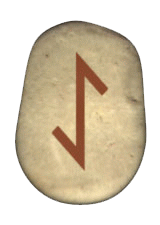
Eihwaz ᛇ - Yew
In Norse mythology, the ash tree (sometimes said to be translated from the old word for yew- needle ash), Yggradisil, is representative of The Tree Of Life. As such, it relates to the cycle of life, similar to the Death Tarot card (signifying the dying of an old way of being or period of life). It can also represent reliability, dependability, trustworthiness, enlightenment, and a sense of purpose, symbolising the connection between all the worlds. Reversed, it can mean confusion and isolation.
KEYWORDS: Connection, inspiration, endurance, sacred knowledge, protection, life cycle’s, divinity

Perthro ᛈ - Destiny
This is the gambler’s rune and as such represents the cup of dice, or fortune. It indicates that influences in life may be down to chance, and so can go either well or not. The lesson here is to learn to take the hand you’ve been dealt and make lemonade out of lemons. In Tarot, this is would be similar to the Wheel of Fortune card. It can also represent hidden meanings, secrets, and change. Reversed it can indicate stagnation and loss of faith.
KEYWORDS: Fate, mysteries, occult, feminine fertility, chance, fortune, mysticism, unknown

Algiz ᛉ - Elk
Algiz is the elk, and so represents defence and protection. If you get this one, it means that you have the internal power to manifest your dreams and that your spirit guides are protecting you along your path. It is said to act as a shield to guard you against evil. It can also represent an awakening and strong intuition. Reversed it means there could be a hidden danger.
KEYWORDS: Protection, guardian, awakening, courage, defence, instincts

Sowilo ᛋ - Sun
Sowilo is the happy symbol of the sun. It represents a time of joy, abundance, luck, and good fortune. It’s a cause for celebration and can indicate a success of your goals, optimal health and an elemental power. It has no inverted meaning. In Tarot, its card is, likewise, The Sun.
KEYWORDS: Success, vitality, inspiration, justice, success, joy, happiness, abundance
Tyr's Aett

Tiwaz ᛏ - Victory
Tiwaz is representative of the warrior’s arrowhead of the God Tyr. It shows that you are capable of spearheading your way through all your troubles and possess great leadership skills, authority and rationality. It can indicate victory and knowing of your true strengths with a willingness to self-sacrifice. Reversed it can indicate blocked creative energies, over-analysis, imbalance, and lack of passion.
KEYWORDS: Leadership, rationality, victory, honour, bravery, courage, strength, perseverance, endurance

Berkana ᛒ - Birch
Berkana is the rune of birth. It represents the Birch Goddess and so indicates fertility and creation, not just of an actual birth (its traditional meaning), but also of projects, partnerships and rebirth. It indicates mental and physical growth, and a regenerative power and liberation of spirit. Reversed it can point to family troubles, anxiety, or rigid control.
KEYWORDS: Fertility, growth, renewal, new beginnings, birth, creation, new projects, creativity

Eoh ᛖ - Horse
Eoh is the horse. This represents man’s trusty aid, our only form of transport in times past. It indicates a moving forward and change for the better with gradual but steady progress. It can also show teamwork, trust and loyalty. Reversed it can show restlessness, craving of change, mistrust or disharmony. It can be seen as The Lovers Tarot card.
KEYWORDS: Progress, movement, harmony, trust, loyalty, friendship, assistance, duality, animal instincts


Mannaz ᛗ - Man
Mannaz is representative of humankind and humanity. It encompasses yourself and identity, and relationship towards others. It is social order and cooperation, our sense of morals and values. Reversed it can indicate self-delusion, manipulation and isolation.
KEYWORDS: Humanity, collective, mortality, community, relationships, morals, values
Laguz ᛚ - Lake
Laguz represents the element of water and so is tied to our emotions, dreams and intuition. It indicates a healing power of renewal, heightened imagination and psychic abilities. It can also relate to mysteries, secrets, the unknown and the underworld. Reversed it can point to fear, misjudgement, lack of creativity and avoidance.
KEYWORDS: Water, intuition, imagination, healing, dreams, mysteries, insight, instinct, knowing

Ingwaz ᛝ - Fertility
Ingwaz is the rune of fertility, representing the Earth God Ing. It points to male fertility, common virtues, common sense, wellbeing, strength, family, rest, and loose ends being tied up. It has no reversed meaning.
KEYWORDS: Fertility, virility, inner growth, virtue, peace, harmony

Othala ᛟ - Heritage
Othala is the rune of inheritance. It tells of our lasting legacy, spiritual heritage, values becoming aligned to what is truly important, communal prosperity and fundamental values. Reversed it can indicate bad luck and prejudice.
KEYWORDS: Legacy, inheritance, spiritual growth, abundance, values, contribution

Dagaz ᛞ - Dawn
Dagaz represents dawn. It shows the coming of age and the ending of a cycle. New beginnings are approaching and new breakthroughs, awareness and awakenings are possible. It represents the transformative power of change and that it is a good time to embark upon a fresh enterprise. A final, positive symbol of hope, certainty and security, it has no reversed meaning. This would be the completion of the cycle with the World card in the Tarot.
KEYWORDS: Day, awakening, consciousness, clarity, hope, balance, growth, new cycles

Wyrd - Odin’s Rune
As mentioned, some sets come with an optional blank rune indicating the Norse God of Creation’s secrets to be withheld. It reflects that we are not supposed to have all the answers and that that’s OK.
As such, its meanings are unknown, secrets, hidden, mystery, ambiguous, unknowable, the answer will reveal itself in time.


Runes


We cannot guarantee the expected results. All metaphysical products are based on faith, and they should never be a substitute for medical care. Never leave a candle unattended. Always handle fire with care. Magister Myrddin Oracle is not legally responsible for any damage or injury that may result from the use of our products. By purchasing our products you are agreeing to the above terms.


