

Yggdrasill & Magical Staves


Yggdrasil
(from Old Norse Yggdrasill [ˈyɡːˌdrɑselː]), in Norse cosmology, is an immense and central sacred tree. Around it exists all else, including the Nine Worlds.
Yggdrasil is attested in the Poetic Edda compiled in the 13th century from earlier traditional sources, and in the Prose Edda written in the 13th century by Snorri Sturluson. In both sources, Yggdrasil is an immense ash tree that is center to the cosmos and considered very holy. The gods go to Yggdrasil daily to assemble at their traditional governing assemblies, called things. The branches of Yggdrasil extend far into the heavens, and the tree is supported by three roots that extend far away into other locations; one to the well Urðarbrunnr in the heavens, one to the spring Hvergelmir, and another to the well Mímisbrunnr. Creatures live within Yggdrasil, including the dragon Níðhöggr, an unnamed eagle, and the stags Dáinn, Dvalinn, Duneyrr and Duraþrór.
Scholars generally consider Hoddmímis holt, Mímameiðr, and Læraðr to be other names for the tree. The tree is an example of sacred trees and groves in Germanic paganism and mythology, and scholars in the field of Germanic philology have long discussed its implications.

Að unni
“To get a girl”, this magical stave is used by a man in love to gain the affections of the object of his desires.

Ægishjálmur
Helm of Awe (or Helm of Terror) to induce fear, protect the warrior, and prevail in battle.

Angurgapi
Carved on the ends of barrels to prevent leaking.

Brýnslustafir
For use on whetstones

Draumstafir
To dream of unfulfilled desires.

Dreprún
To kill an enemy's cattle.

Feingur
A fertility rune.

Gapaldur
Two staves, kept in the shoes, gapaldur under the heel of the right foot and ginfaxi under the toes of the left foot, to magically ensure victory in bouts of Icelandic wrestling (glíma)

Ginfaxi
Two staves, kept in the shoes, gapaldur under the heel of the right foot and ginfaxi under the toes of the left foot, to magically ensure victory in bouts of Icelandic wrestling (glíma)

Hólastafur
To open hills.

Kaupaloki
To prosper in trade and business.

Lásabrjótur
To open a lock without a key.

Lukkustafir
Whoever carries this symbol with them encounters no evil, neither on the sea nor on the land.
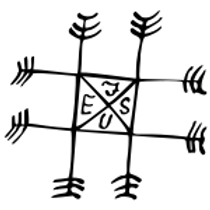
Máladeilan
To win in court.

Nábrókarstafur
A stave used when making necropants (nábrók), a pair of trousers made from the skin of a dead man that are capable of producing an endless supply of money.

Skelkunarstafur
To make your enemies afraid.
(A similar looking stave is titled Óttastafur in the Huld Manuscript.)

Rosahringur minni
A lesser circle of protection

Smjörhnútur
Butterknot, to find out if butter was made using milk stolen by a Tilberi.

Stafur gegn galdri
Staves against witchcraft.

Stafur til að vekja upp draug
To invoke ghosts and evil spirits.

Þjófastafur
For use against thieves

Tóustefna
To ward off foxes.
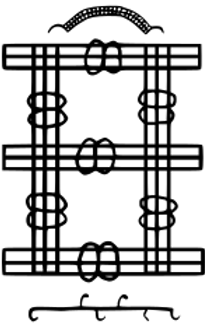
Varnarstafur Valdemars
Valdemar's Protection Stave; increases favor and happiness.

Vatnahlífir
Protection against drowning.

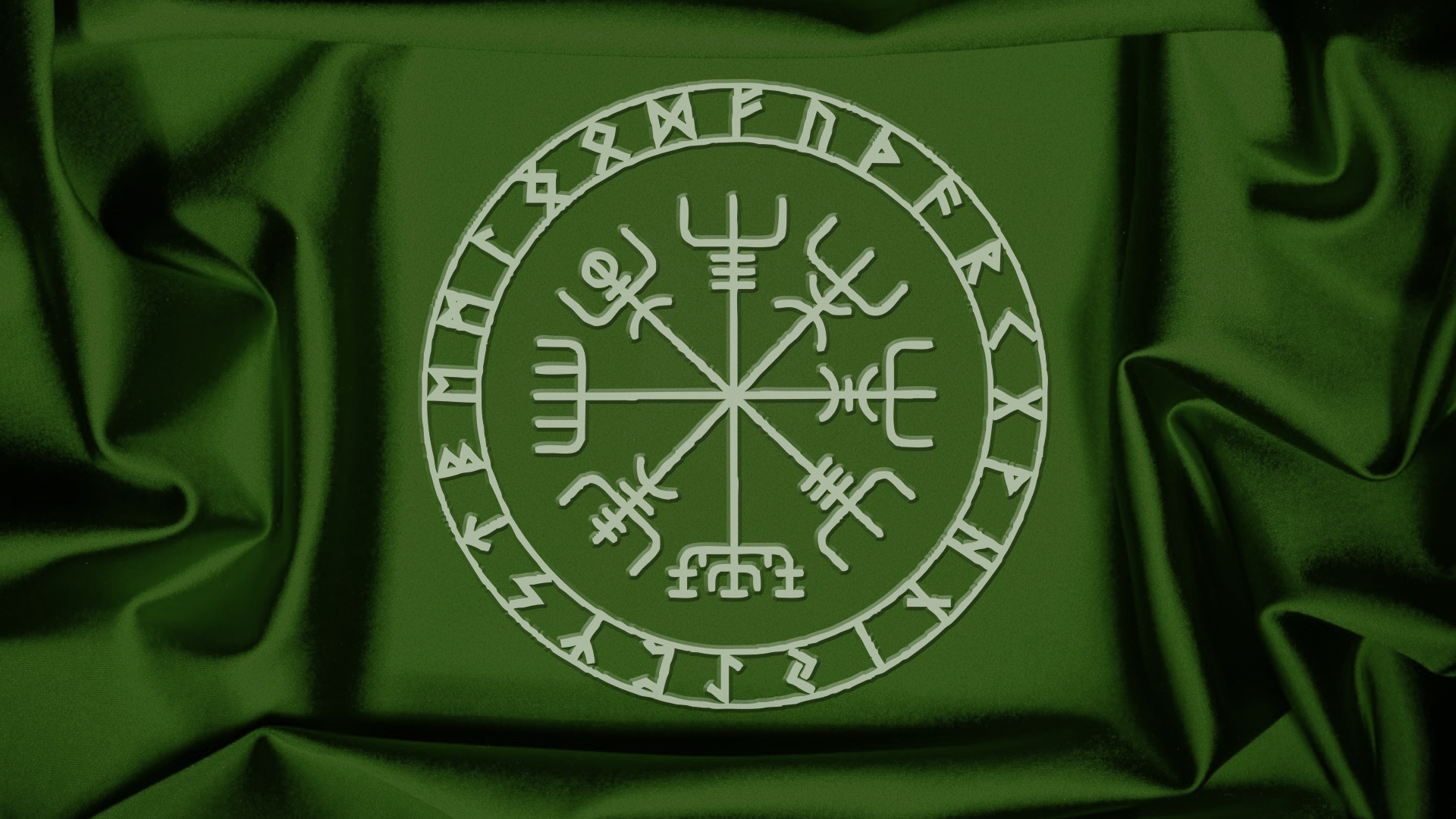
Vegvísir
A vegvísir (Icelandic for sign post or wayfinder) is an Icelandic magical stave intended to help the bearer find their way through rough weather. The symbol is attested in the Huld Manuscript, collected in Iceland by Geir Vigfusson in 1880 (but consisting of material of earlier origin).
A leaf of the manuscript provides an image of the vegvísir, gives its name, and, in prose, declares that "if this sign is carried, one will never lose one's way in storms or bad weather, even when the way is not known".
The vegvísir is mentioned in two sources, the Huld Manuscript compiled by Geir Vigfusson in Akureyri in 1860 and The Galdrabok, a magical grimoire.
The vegvísir is often confused to be a Viking symbol. There is no evidence of this though and the Huld Manuscript, where it is mentioned, was collected eight centuries after the end of the Viking Age

Veiðistafur
For luck in fishing.


